The wars
Neuville-Saint-Vaast at the heart of the fighting, from 1914 to 1945
Neuville-Saint-Vaast at the heart of the fighting, from 1914 to 1945
On the night of 4–5 October 1914, Neuville-Saint-Vaast was overrun. For 30 months on this front, in the clinging mud of the trenches and the fortifications of the Labyrinth, French and British troops from Europe and overseas fought bitterly to free the village and then Vimy Ridge. The village was wiped off the map.
German armies entered Belgium on 4 August, then France. Arras was taken on 6 September. The Battle of Arras (1–4 Oct.) halted the Germans at the gates of the city, but Neuville-Saint-Vaast was occupied.
Around Neuville the Germans built permanent fortifications — kilometres of criss-crossing trenches forming the “Labyrinth” (Le Labyrinthe): sandbags, concrete, machine guns every 25 metres, underground shelters and belts of barbed wire.
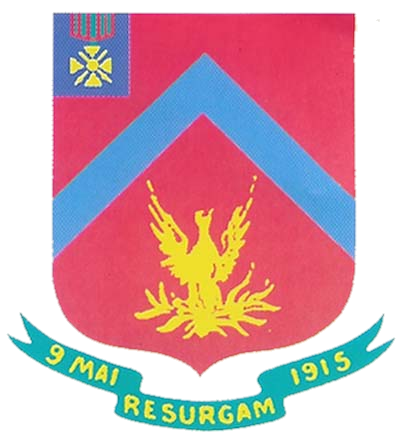
The Moroccan Division broke through as far as Hill 140 on Vimy Ridge. La Targette was retaken, but Neuville would not be fully recaptured until 9 June 1915, after fierce street fighting and at the cost of the village's total destruction. The opening day of the offensive became the date on the coat of arms: 9 mai 1915, Resurgam! (9 May 1915, I shall rise again!)
Canadian troops captured Vimy Ridge, a feat of arms that became a founding moment of Canadian national identity. The Rue du Canada leads to the Canadian National Vimy Memorial, to the north of the village, which commemorates the Canadian soldiers who died for the freedom of France.
Arras was relieved from 27 August. Lens was liberated on 3 October, Lille on 17 October. By 16 October the whole of the Pas-de-Calais was free. The Armistice of 11 November 1918 brought the “war to end all wars” (la « Der des Der ») to a close.
Neuville was rebuilt. Houses, shops, the church — everything was raised again stone by stone. The war memorials, the military cemeteries of many nations and the Cité des Mutilés (the disabled veterans' estate) bear witness to the sacrifice of an entire generation.
In the spring of 1915, General d'Urbal's army launched a large-scale offensive aimed at breaking through the German lines north of Arras and seizing Vimy Ridge, which overlooks the plain of Lens.
For its part, the 20th Corps was ordered to take Neuville-Saint-Vaast, a large village that had 1,200 inhabitants before the war and had fallen into enemy hands in October 1914. The Germans had fortified the position heavily.
Protected by 4 successive lines of trenches, Neuville-Saint-Vaast had become a veritable fortress.
Of the 150 houses in the village, not one had not been loopholed and fitted out for defence; not one cellar window but had a machine-gun barrel trained through it.
The cellars sheltering the defenders had been built up in tiers and padded, the ground floors barricaded and concreted, the whole reinforced with barbed wire as thick as a finger.
To supply the garrison, a 60-centimetre narrow-gauge railway ran along the village's main street and sent out branches to the forward positions.
In short, a formidable strongpoint, held by elite troops of the Bavarian I Reserve Corps.
On 9 May 1915 our offensive began. Within 2 hours the 11th Division reached the southern edge of Neuville-Saint-Vaast, where fierce fighting broke out, while the battle also raged among the graves of the cemetery, taken and lost twice in the course of the day.
But the enemy's resistance stiffened. Two thirds of the village remained to be taken.
To finish the job, General d'Urbal called on a fresh unit, the 5th Division, arriving from a quiet sector under an already renowned commander: General Mangin.
He was given the hard task of completing the capture of Neuville-Saint-Vaast. But he was a man daunted by no task and deterred by no difficulty.
Mangin wasted no time. On 28 May, his troops barely arrived, he seized a few houses to straighten his start line.
Heedless of the violent bombardment with which the German artillery was pounding our lines with 105, 150 and 210 mm shells, he pressed on rigorously with his preparations.
And on 1 June he sent his regiments into the attack. But caught in machine-gun crossfire and enveloped in clouds of asphyxiating gas, our troops were forced back to their starting trenches. The day's gains amounted to 2 houses, but the struggle went on all night with grenades.
Over the following days our artillery preparation resumed with greater means, and on 5 June Mangin launched a fresh attack along the axis of Neuville's main street, almost a kilometre long.
On the left, the 36th Regiment, after 4 attempts, remained pinned to the ground. It had come up against intact defences, and the explosion of a mine had buried a large body of the attackers.
On the right, the 129th had better fortune and advanced under intense fire, but its commander, Lieutenant-Colonel Denis-Laroque, was among the first to be killed.
By nightfall a whole group of houses was in our hands, but great confusion reigned among our troops, with the units of the 6 attacking battalions entangled with one another. Our losses were considerable and the enemy's defence was still holding.
Informed of the situation, General Foch summoned Generals d'Urbal and Mangin. Judging that our present superiority over the enemy had to be exploited at all costs, he decided to keep up the fight day and night without respite until the village was entirely taken.
Mangin gave his orders accordingly, determined not to leave the enemy a moment's rest. The 129th, badly mauled, had to be relieved by the 36th, and the battle resumed with renewed fury.
On 6 and 7 June our troops advanced with grenades from street to street, from house to house. 8 June was a particularly hard day. Resumed from 2 a.m., our attacks went on yard by yard and succeeded in carrying a large group of houses on the main street.
The garrison of one of them, surrounded on all sides, refused to surrender and was wiped out by its own artillery. At last, at 3 p.m., the enemy fell back in disorder towards the north.
Night came just in time for the surviving officers to reorganise our mixed-up, decimated, exhausted units. At daybreak on 9 June the final assault went in. In an irresistible surge, our soldiers, forgetting all their fatigue and glimpsing the end of their efforts, wrested the last houses of the village from its final defenders.
These 14 days of bloody fighting cost the 5th Division nearly 2,600 men, including 72 officers. On the German side, 500 bodies found beneath the smoking ruins, not counting those buried under the rubble, bore witness to the extraordinary violence of the struggle.
A model operation in the methodical capture of a fortified village, and a splendid testimony to French courage and tenacity, the capture of Neuville-Saint-Vaast did honour to our heroic troops as much as to the energetic commander who had led them to victory.
When, in mid-September 1914, French soldiers put down their rifles and, at JOFFRE's request, began digging holes with their shovels so as never again to fall back before the Germans, they did not know they were tracing the first line of a trench system that would eventually stretch from the North Sea (Nieuport) to the Swiss border, some 700 kilometres…
From then on, for more than 4 years, millions of men would take turns in these trenches, losing an arm, their life, their mind, or simply the carefree spirit of their twenty years.
When December 1914 caught the numbed armies on this frontier that dared not speak its name, every man understood he would not be home for Christmas, as he had hoped.
JOFFRE did try to break through the front on 17 and 18 December with the support of the British Army, but the attack ended only in more bodies left in no man's land.
So every General Staff, every nation resigned itself to organising an exceptional Christmas for the men it had sent to fight out there — men who, each side believed, would be home by spring.
And so the finest wines, champagne, whiskies and schnapps arrived in the French, British and German trenches.
The everyday canteen fare became extraordinary.
Many a soldier enjoyed a meal more lavish than the one he had shared with his family a year before — an eternity ago…
In some sectors the fighting spirit was in no way dulled by Christmas Eve: men fought in many places, and died there, even on Christmas night…
But in many other places the guns had been silent for some days. Sparrows had even ventured back to flit about places they had deserted.
So the men ate the cooks' feast around coal braziers, when there was coal. Memories of family back home and of Christmases past danced in the eyes of these men so far from home, from their parents, their wives, their children.
A vast longing, tinged with sadness, crept into the trenches and stole into men's hearts. In many places the night passed in this mood, but elsewhere men defied the ban…
For in those places the Germans had set lit Christmas trees on top of their trenches, and 100 metres away French or British soldiers watched these unlikely lights twinkling in the Christmas night.
Voices ventured to strike up “Stille Nacht” (“Silent Night”), at once taken up in English or in French, depending on the place.
Song and music (mouth organ or bagpipes) threw a bridge between the opposing trenches.
Then, little by little, men climbed out of their trenches without their rifles and dared to step out into no man's land to meet the man opposite who was singing the same song in his own words.
The men met in the middle of no man's land, snow-covered in places… They held out a hand to one another, tasted each other's cake and liquor.
As Louis Barthas — a cooper from the Aude, lost on the plain of Artois, who also fraternised at Neuville-Saint-Vaast, but in December 1915 — would write, a shared suffering and misery united these men beneath their different uniforms.
For a few hours, a few days, or even longer in some places, the men stopped fighting. Often they met to drink, eat, swap newspapers and exchange addresses so they could meet again after all this…
Of course the General Staffs found out, of course they were not best pleased, and of course the war resumed its course…
But no General Staff could erase from the memory of those who had fraternised the Christmas trees, the songs, the laughter and the faces of the men opposite, so like their own.
Paul Dubois (Moroccan Division, 4th Tirailleurs) tells the story of the “Second Battle of Artois”.
On 9 May 1915 a major offensive was launched in Artois. The “Second Battle of Artois” was intended to break the German front. Several divisions took part, including the Moroccan Division. Paul Dubois had been a corporal since 1 April 1915. He would be seriously wounded at Souchez on 16 June 1915.
“9 May, the weather is superb. We have been waiting for the attack for several days. We are billeted at Acq, 6 km from the front line. The evening before, we were ordered to sleep with our packs ready, tent sheet on the pack, and to be ready to move at the first alert. At 2.30 in the morning the captain turns up: ‘Packs on!’ Ten minutes and it's done. We assemble in a meadow under tall poplars, out of sight in case any enemy planes fly over.
The bombardment starts at 5 and the rumble grows louder and louder. By 7 you can't hear yourself speak, and by 9, though we are 4 km from the front line, we are jumping on the spot. Guns of every calibre fire without a break. It's worse than a drumroll. We have armoured trains with naval guns firing from 10 km away. Then, at 9.30, the 75s join in all at once. It's a noise to drive you mad.
At 10 the general assault goes in on a 10 km front. The English are attacking on our left, in front of Loos. [Note: the British were in fact attacking towards Aubers and Festubert; the Battle of Loos took place in September 1915.] By 11.30 the first waves have gone 4½ km; and 5 km ahead the Boches are either pulped under this storm of steel or driven mad, giving themselves up and running off wherever they can, as if stunned.
Our regiment is the third line of reinforcements. We move up to Mont-Saint-Éloi and at 2 p.m. we set off to have a go ourselves, because we are itching to. We have already taken the Béthune–Arras road, La Targette, Neuville-Saint-Vaast. We go forward through the captured trenches and stop near Neuville to dig trenches there as our strongpoint.
The battle goes on through the night; we move up to close in on the front line. In the morning, shells and shrapnel rain down on us. My chechia cap is torn and knocked to the ground by a shell splinter. I pick it up and keep running. We reach the first houses of the village, which are one vast blaze. Bullets and shot pour in from every side; you are completely dazed. During the night we have not managed to hold the whole of Neuville. The Boches hold a few houses to the north, and we hold the south.
The street fighting begins. One of our batteries has set up at the entrance to the village and is making itself heard. It's doing good work.
Evening comes and we are ordered into the front line. We crawl to within 200 metres of the Boches, because walking upright is no longer the fashion. And straight away we dig trenches to shelter in by day while waiting to advance, if that's possible. In this war you can't last without being hidden or lying flat.
That night we had a visit from some Boches — not to fight but to surrender. Perhaps 80 of them, in 2 groups, and a captain. We greeted them with rifle fire, and when they said they were ‘Kamarades’ we gave them a good welcome. They are in despair over the ‘75’ and say that if we keep bombarding them with it, they will all surrender. Luckily our best comrade is in no danger of falling silent.
Daybreak comes; it is 11 May. Bullets keep cracking past our ears. My company captain, Guenbau, falls, hit by a bullet that goes through the ribbon of his Légion d'honneur. The warrant officer of my section is wounded at the same moment, and everyone is ordered to keep under cover. The heavy shells keep falling. One of them buries two squads at once under earth. Even so, at noon the bombardment starts up again on our side. We are told it will last 2 hours. At 2 p.m. we are to go over the top. A lieutenant is sent to take command of the company.
The mass of high-explosive shells falling in front of us makes a black smoke that catches in our throats and almost stops us seeing the Boche lines. Neuville has been burning for 3 days. The Boches are shelling the part we hold, and we the rest, which is theirs. The houses come down almost all at once.
2 p.m. arrives: here is the assault. We come out from behind our clods of earth. The machine guns and the ‘75s’ are raging. The 155 and 270 mm shells pin down the reinforcements 2 and 5 km away. We advance several hundred metres behind a crest, in front of the Bois de la Folie, and settle for that. The Boches have lost another good strongpoint, and the dead ones won't be sending any more bullets our way. Meanwhile quite a few of ours have fallen, but many are wounded.
The evening of this memorable day arrives. We hold our positions. A small counter-attack is driven off. We keep digging. It's 1 in the morning when a regiment comes to relieve us. But before leaving them we told them: ‘Carry on with what we were doing.’ So off we go for a bit of a rest. We reach Mont-Saint-Éloi, which this time is 6 km away, whereas 4 days earlier it was about 2 km. Then our first thought is soup, after roll call of the living. Indeed, since the evening of 8 May we had had no soup, nothing hot at all. In 4 days I ate a loaf and a half of bread and a pound of chocolate; for three days I drank half a litre of water and, like my mates, got no shut-eye, apart from a few hours during the big bombardments, out of 24.
Of a company that numbered 218 men before the attack, 67 of us came back.
So we stuff ourselves properly. And before that — I forgot to say — as there was a stream close by, I washed and scrubbed myself from head to toe, as did my mates, because that gave us even more pleasure than eating.
And after that the post orderly brings the letters. I answer about ten; it does me a lot of good to have news after a session like that, and in them, what's more, a few little flags tucked inside. An hour later it was the wine sloshing in our mugs, because we were making up for the misery and the thirst of those 4 days.
As there were no billets where we were, everything being full of troops, they had us bed down in a wood close to the village. We pitch the tent with a few leaves and a little straw and, at nightfall, everyone stretches out under it wanting only one thing: a bit of kip. But at 11 p.m. the 210 mm shells start falling in the wood: 100 metres in front and 100 behind. Right in it. And a dozen land very close to us. You can hear the splinters striking the trees, and tent canvas isn't very strong. And suddenly we hear: ‘Packs on!’ Everyone grabs his kit; we strike the tents and forward, off we go. Those swine had spotted us during the day and said to themselves: ‘That'll do for tonight.’ They imagined we would get no more sleep. Wrong. We go straight off to Acq, to the meadow where on the 9th we had waited for the attack. And there, rest — but that was another 3 km covered.
And there I stretch out on the grass with my tent sheet over me and sleep until 6 all the same. What a surprise when I woke to find it was raining and my face, which had been uncovered, was soaking wet, and I hadn't felt a thing. I must have been sleeping soundly.
Then the soup arrives and at 1 p.m. we set off a little further to the rear, to Béthonsart. It's 12 km away. It is still raining. At last we arrive, all of us very tired. Soup again, a few glasses of wine, and we are billeted in a farm, in a loft. We laugh to find ourselves in a château, on the first floor. And at 8 p.m. everyone is asleep, quite peacefully this time, safe from the shells, savouring this well-earned rest. I need hardly say how well I slept.
On the roll of honour, our division was mentioned in army dispatches for its bravery in the attack of 9, 10 and 11 May 1915.”
Twenty years after the Great War, Artois was plunged into conflict once more. Occupied from May 1940 without suffering major destruction, Neuville-Saint-Vaast endured four years of occupation before being liberated on 1 September 1944. Behind this apparent calm, men and women chose to resist, at the risk of their lives.
After the breakthrough in the Ardennes, the whole of Artois was occupied by the end of May 1940, even before the Dunkirk evacuation. Neuville-Saint-Vaast was occupied without a fight: the village, already entirely rebuilt after the First World War, was this time spared direct destruction.
Some villagers joined the networks of the internal Resistance. Jean Tison, a resistance fighter from Neuville-Saint-Vaast, was arrested by the Germans and shot at Arras on 5 April 1944, five months before the village was liberated. His sacrifice bears witness to the courage of those who, in the shadows, refused to resign themselves to defeat.
Advancing from Normandy, the Allied forces reached Artois in late summer 1944. Neuville-Saint-Vaast was liberated on 1 September 1944 — this time without suffering the total destruction that had wiped it out almost thirty years earlier.
The La Targette French National Cemetery (nécropole nationale), a Great War cemetery, also holds the graves of men who fought in the second conflict: 593 French, 170 Belgian and 4 Polish soldiers who died between 1939 and 1945 lie there in separate plots.
The Czechoslovak cemetery, next to the Nazdar memorial (unveiled in 1925, rebuilt in 1968) dedicated to the Czechoslovak volunteers of the Great War, also holds 136 Czechoslovak soldiers of 1939-1945, including 29 airmen.